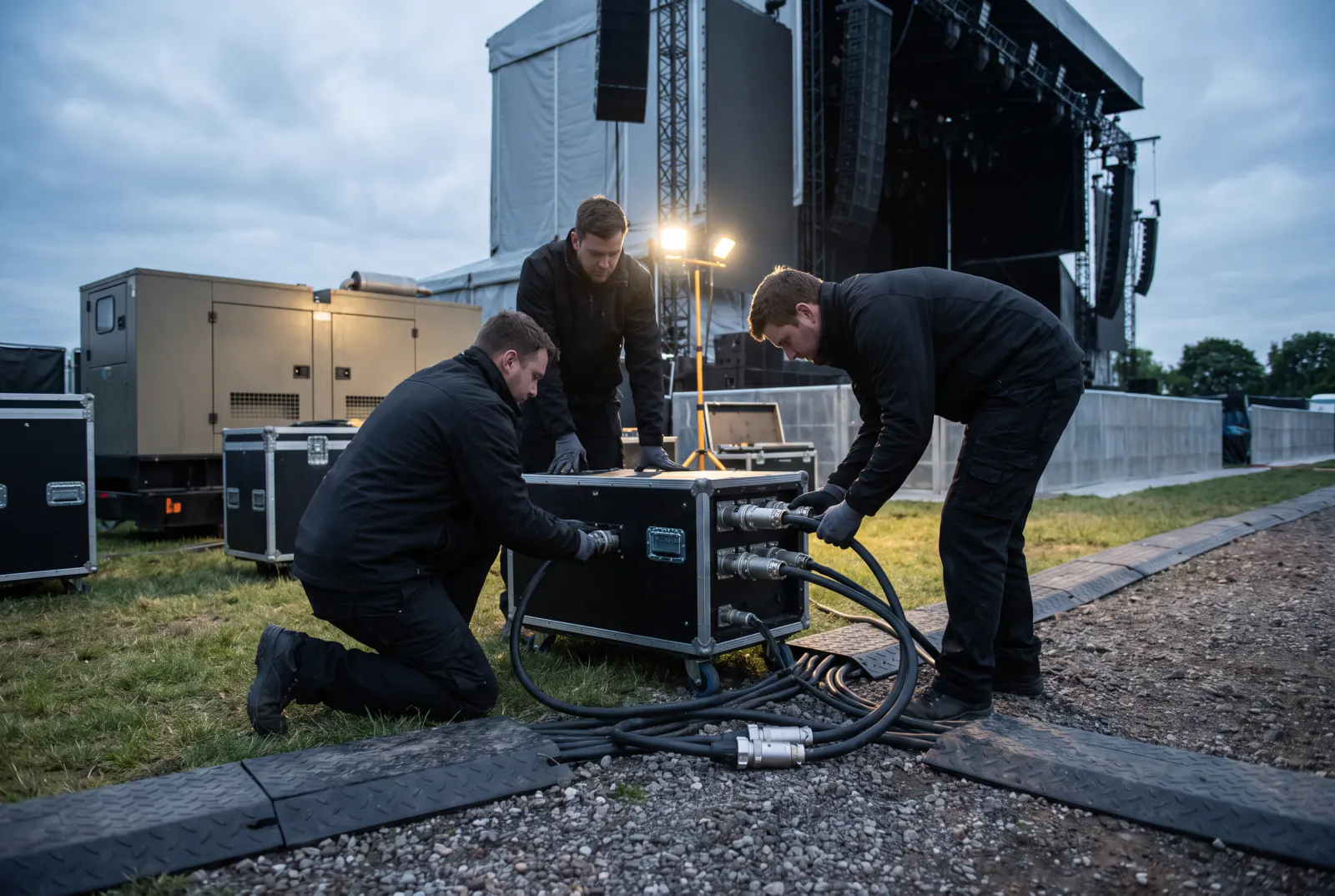
Load-in and load-out never appear on the invitation, but they shape the whole event. A schedule that is too tight here puts everything after it at risk.
Start with the venue
Ask when you can get in, when you must be out, and whether other events share the room or the loading dock. Check the route from the vehicle to the stage: door widths, lifts, stairs, floor protection and parking. A long push from the dock can take more time than you expect. Check for limits on noise and vehicle access at night as well.
Work in the right order
Departments depend on each other. Rigging and truss usually go first, because they need a clear floor. Power comes next, followed by staging, then sound, lighting and video. Programming, focusing, sound checks and rehearsal need quiet time after that. Lay this order against the clock and leave a buffer before doors open.
Do not forget the way out
Load-out is often planned last and done when everyone is tired. Allow time for the audience to leave, for packing everything into cases and for checking each item against the list. Agree who stays until the last vehicle is loaded. A late finish may call for a fresh crew. Share the venue access times in your rental request, and we will build them into our Rentman planning and our offer.